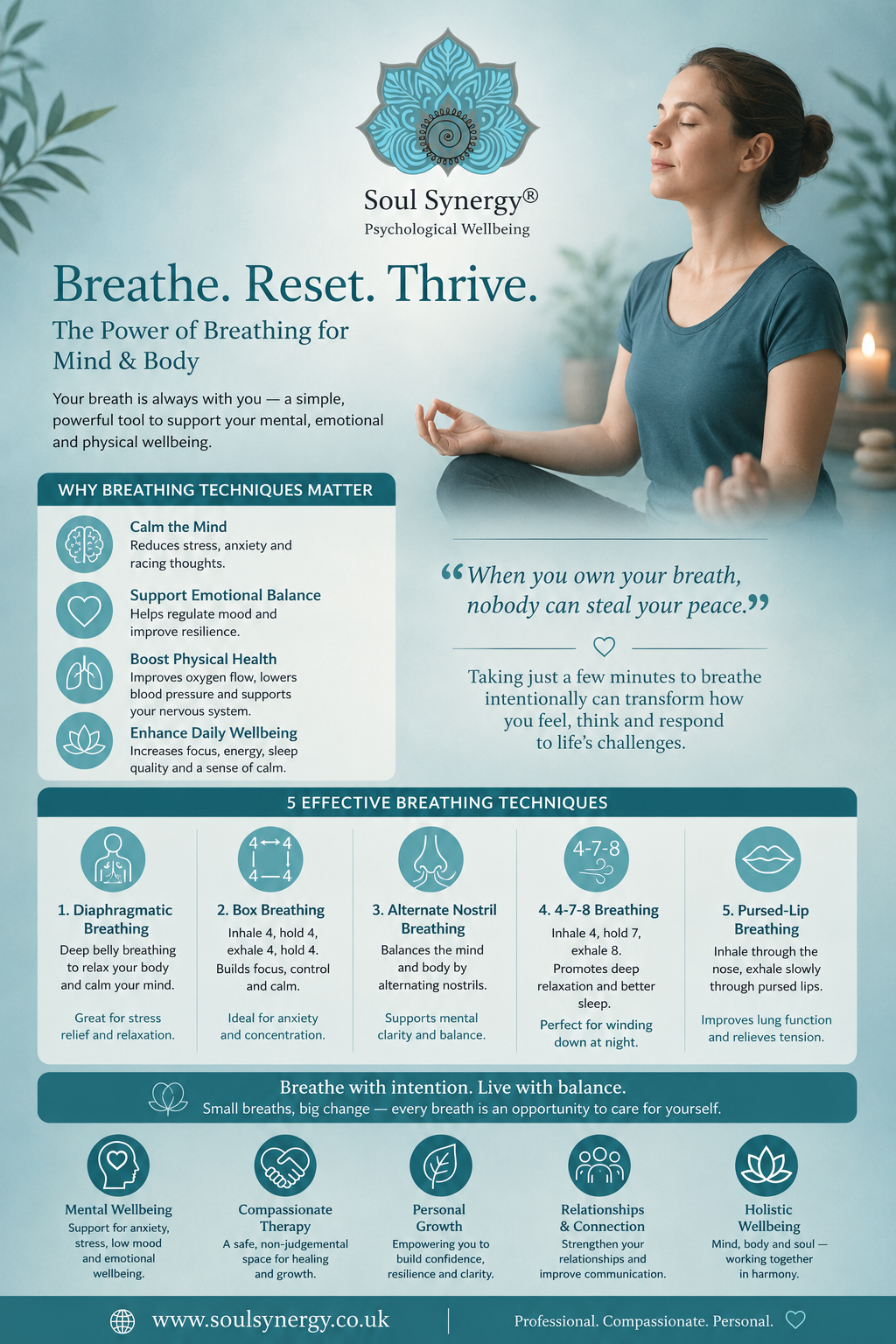
Coping strategies and tools
Breathing techniques work because they influence the autonomic nervous system, especially the balance between the body’s ‘flight or flight’ and ‘rest and digest’ responses. Even practicing this daily for 5 minutes can make a noticeable difference over time
Belly breathing
1 hand on chest & 1 hand on belly
inhale through nose (see belly rise)
exhale slowly through mouth
reduces stress and anxiety
promotes calmness and emotional regulation
improves focus
increases oxygen efficiency
lowers heart rates an blood pressure
relaxes tense muscles
Box breathing (4-4-4-4)
inhale for 4 seconds
hold for 4 seconds
exhale for 4 seconds
hold for 4 seconds
improves concentration
helps manage anxiety and panic
creates mental clarity
slows breathing rate
activates the parasympathetic nervous system
reduces physical tension
Alternate nostril breathing
close one nostril with your thumb
inhale through open nostril
switch nostrils and exhale
continue alternating sides slowly
enhances mental balance and calm
improves attention and mindfulness
reduces mental fatigue
encourages slower, deeper breathing
supports respiratory efficiency
promotes relaxation
4-7-8 breathing
inhale through the nose for 4 seconds
hold the breath for 7 seconds
exhale slowly for 8 seconds
quietens racing thoughts
encourages sleep
reduces stress and agitation
slows heart rate
improves sleep quality
Pursed lip breathing
inhale slowly through the nose
purse your lips (like blowing out a candle)
exhales slowly through pursed lips
creates a sense of control during stress
reduces panic during shortness of breath
improves airflow into lungs
helps with breathlessness
aids respiratory conditions